
Vote. Not for a party. Not out of obligation. Because you have looked at the alternative and that this is the moment that determines which direction the sequence goes.
There is a pattern in history that repeats with enough consistency to be called a law. When a population has had a voice in who governs them — even an imperfect, partial, flawed voice — and that voice is taken away or rendered meaningless, the society does not stabilize. It fractures. And the fracture is never clean, never limited, and never kind to the people at the bottom who needed the mechanism most.
This is not speculation. This is the record.
The Roman Senate did not fall to external enemies. It fell because it spent generations narrowing the circle of who had a genuine stake in its survival. By the time Caesar crossed the Rubicon, the Senate had so thoroughly managed ordinary Romans out of the equation that there was no popular will to defend the institution. They had confused the removal of participation with the consolidation of control. They were wrong. What they consolidated was their own irrelevance, and then their own end.
France did not erupt suddenly in 1789. The ledger moved first. Blacksmiths, tool merchants, hardware traders — their records show the shift two years before the Bastille fell. People were quietly acquiring means before they had a stated intention. The guillotine was the public event. The preparation was invisible until it wasn’t. And when it finally landed, it did not land on the court alone. It worked its way through everyone. The people with the most legitimate grievances got the chaos. Someone else got the power.
Weimar did not transition. It shattered. The industrialists and conservative politicians who believed they could use and manage what they had enabled were among the first consumed by it.
None of them landed softly. Not one society in the historical record that lost its peaceful mechanism for change made a graceful transition to something better. The fall is always harder than anyone living through the stability could have imagined.
This is not a history lesson offered from a comfortable distance. This is a description of a recognizable pattern — and a frank statement that some of its early markers are visible right now, in New Hampshire, in 2026.
In the past two years, New Hampshire has eliminated the affidavit process that allowed voters without ID to attest to their identity under penalty of perjury. It has removed student and university identification cards from the list of acceptable voter ID. It has added citizenship documentation requirements for first-time voters. Each of these changes was passed along party lines. Each was described as a security measure. New Hampshire election officials have repeatedly stated there is no evidence of widespread voter fraud in the state.
What has been removed, step by step, is the accessibility of the mechanism itself — particularly for young voters, first-time voters, and anyone whose documentation doesn’t fit a narrowing set of acceptable forms.
Six weeks ago, legislation passed in New Hampshire consolidating county-level administrative authority over school districts. Shortly after, it leaked that curriculum coordination with the federal executive was part of the intent. In a restaurant in this state, two teachers said they were removing their own children from the public schools. Four surrounding tables and two members of the waitstaff spontaneously asked if those teachers could instruct their children too.
That is not a political opinion. That is a community making a real-time decision based on instinct. People know when something has crossed a line, even when they don’t have the historical framework to name what they’re seeing.
There is a behavioral pattern that precedes the historical breaking points. It shows up in purchasing records before it shows up anywhere else. Hardware. Tools. Portable storage. Communication infrastructure that operates outside traceable channels. It is not ideological. It is practical. It is what populations do when they have quietly concluded that the official systems are not going to protect them and they need to begin providing for themselves.
This is not a threat assessment. It is an observation. And the observation is that a segment of the New Hampshire population — and the broader American population — is in that phase of private recalibration right now. They have not made a final decision. They are hedging. The hedge is the window.
The people making these quiet preparations are not extremists. They are people who had a stake in the system, watched the system demonstrate that it did not have a stake in them, and are responding the way populations have always responded when that becomes clear. Both parties have contributed to that demonstration. The Republicans through active restriction of participation. The Democrats through the assumption that disgust with Republican behavior constitutes affection for themselves — a profound and persistent misreading of the electorate that has driven millions of eligible voters not to the other party but away from the entire mechanism.
When people abandon the mechanism, the pressure does not go away. It finds another outlet. History is unambiguous on this point.
There is one additional factor that has no historical precedent and no fully understood implication.
Rome operated at edict speed. News of Caesar’s assassination took weeks to reach the outer provinces. By the time the message arrived, local governors were still making decisions based on a political reality that no longer existed. That lag was a buffer. It created space between event and response, between grievance and action, between the moment a society began to fracture and the moment that fracture became irreversible.
That buffer is gone.
A piece of legislation passed in Concord is being discussed at kitchen tables across the state before the ink is dry. A conversation that starts at one restaurant table reaches four surrounding tables in ninety seconds and is in someone’s group chat before the check arrives. The institutional apparatus — the legislatures, the appointees, the party structures — still moves at edict speed. Deliberate. Sequential. Confident in its timeline.
The population moves at stream speed.
That asymmetry — between how fast power moves and how fast people move — is the most structurally dangerous condition in the current moment. The people engineering these conditions are operating on a timeline that no longer exists. The population absorbing and responding to them is operating on a timeline those people are not equipped to read.
So this is the call.
Not — check your registration status, although you should.
Not — democracy is a privilege, although it is.
The call is this: the vote is the last peaceful mechanism. Not as a slogan. As a literal, historically verified statement of fact. Every society that lost this mechanism, or rendered it meaningless, found out what replaces it. And what replaces it is never better for the people who needed the mechanism most. Not once. Not anywhere in the record.
The people suppressing participation believe it benefits them. History says they are wrong. The people assuming they will inherit the disgust of the electorate believe it converts automatically to their advantage. History says they are wrong too. What both of them are engineering, together, through action and inaction, is the condition that precedes the kind of events none of us want to live through.
The vote right now is not a social duty. It is not a civic reminder. It is an act of intervention in a recognizable sequence of events that, once it reaches a certain point, has never been reversed peacefully.
We are not at that point.
We are close enough that the window is measurable.
Vote. Not for a party. Not out of obligation. Because you have looked at the alternative and you know, the way people have always known before it was too late, that this is the moment that determines which direction the sequence goes.
Don’t let them stop you.
You are doing more than your social duty.
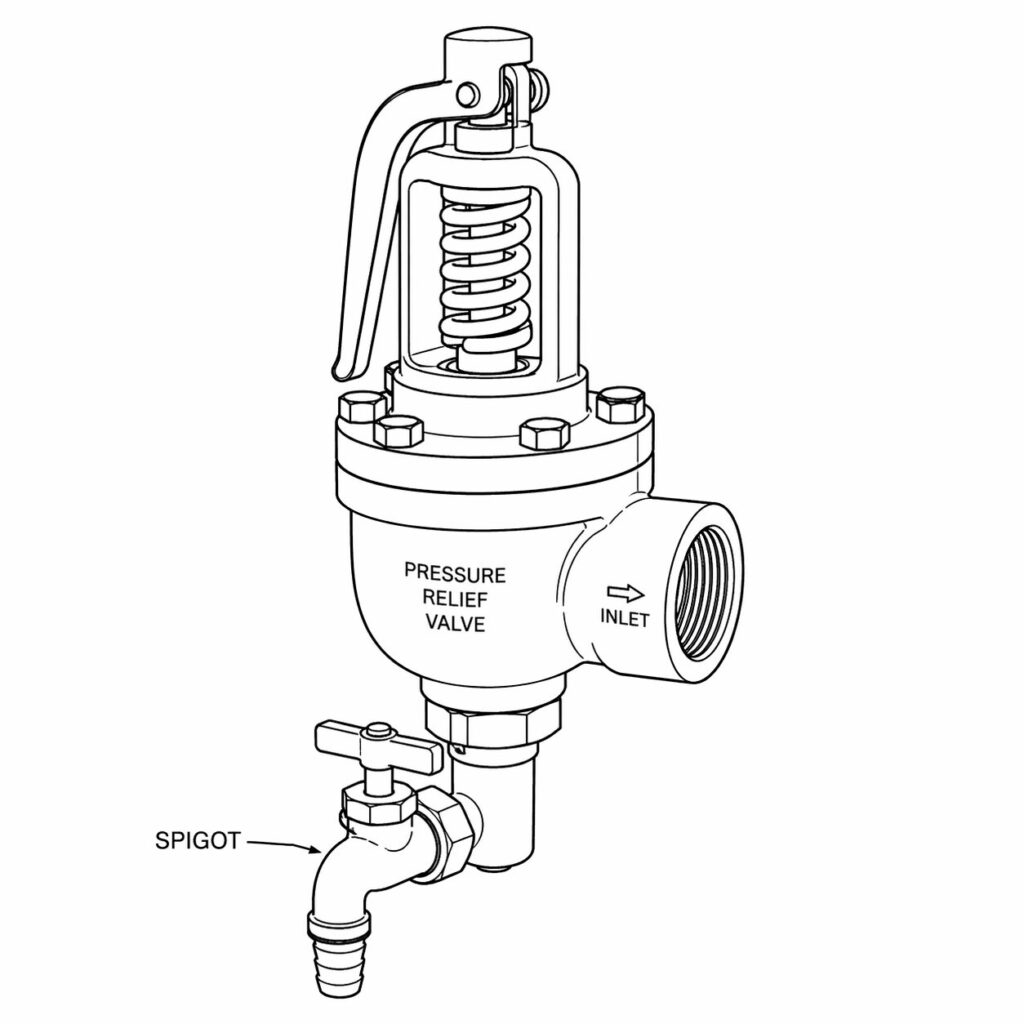
You are holding the valve open.
Yes. I am running for the United States Senate in New Hampshire.
And everything I have written here is true regardless of whether I win.
I want you to print this out. Put it in a book. Set it on a shelf. And I genuinely, deeply hope that you never need to take it down and read it for any reason other than curiosity about a moment when things could have gone differently and didn’t.
Because if the valve works — if people vote, if the mechanism holds, if enough citizens understand that what they do in that booth right now is an act of intervention and not just participation — then this document becomes a footnote. A warning that was heard in time. A pressure that found its peaceful release and dissipated into something better than what history usually delivers.
But if it doesn’t —
You will be reading this again. Not as history. As context for something you are living through. And you will recognize every marker described here because you will be watching them play out in real time at mathematical light speed with no buffer and no lag and no time between the event and the response.
I am not claiming prophecy. I am claiming history. The record is clear and it is consistent and it does not require special gifts to read. It only requires the willingness to look at it honestly and say what it shows.
So vote.
Not for me. Not for any party. Not out of habit or obligation or because someone told you it’s your duty.
Vote because you have read this. Because you understand what the alternative looks like when it arrives. Because the people who benefit from your silence — on both sides of the aisle — are counting on your exhaustion and your disgust and your conclusion that none of it matters.
It matters.
You are not just casting a ballot.
You are holding the valve open.
Don’t let them stop you.